
Introduction
Since the first official health record booklet in 1929 and the arrival of the Carte Vitale in 1998, our relationship with healthcare has changed remarkably little. State-led attempts to modernise this space, most notably the Personal Medical File (DMP) launched in 2011, ran into persistent problems of accessibility, awareness and service fragmentation. Meanwhile, the rise of the Quantified Self since 2007 brought a wave of solutions promising to improve our relationship with our health, without ever truly connecting them together. At the Studio Innovation of Groupe La Poste, I explored this question alongside Zifan Wang, a Chinese industrial designer colleague whose background and sensibility brought a genuinely different perspective to the work: what if health data could become tangible, visible, alive? Rozo is the concept that emerged: a digital health record combining a web application and a connected object.
How might we make a household's health data accessible, centralised and tangible, in order to simplify the relationships between healthcare stakeholders and improve day-to-day medical monitoring?
Prospective exploration of the Rozo concept—scenarios and narrative around how health is experienced at household level.
Web application mockups, user flows, and information hierarchy.
Co-design of the connected object with Zifan Wang: form, material, exploratory sketches and full 3D modeling.
Problem definition
The digital health sector suffers from a fundamental paradox: the data exists, but it is scattered, siloed and hard to access. The DMP remains largely unknown, and activating it requires going through a healthcare professional. The Carte Vitale needs regular updates. Connected health devices collect data without linking it to any structured medical record. This fragmentation creates constant friction for both patients and caregivers, and prevents anyone from forming a coherent, continuous picture of an individual or household's health.
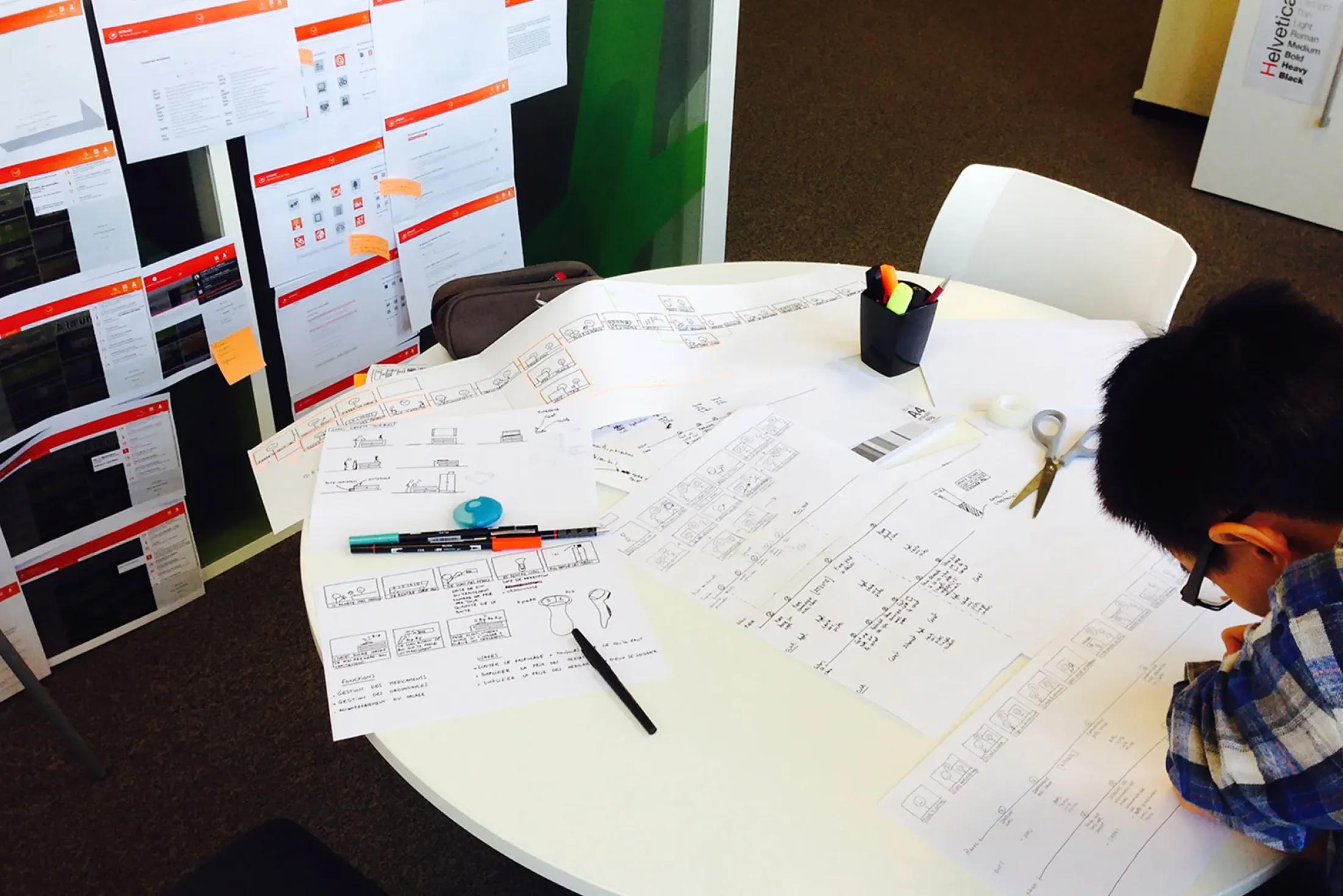
This project followed a design fiction approach rather than a formal user research process. The starting point was a solid market analysis, drawing on an examination of existing tools (DMP, Carte Vitale, connected health devices) and a prospective reflection on how health-related behaviours are evolving. The central question was not how users interact with existing tools today, but what a coherent and human health experience could look like tomorrow. It was within that speculative space that Rozo took shape.
Data fragmentation is the core problem
No existing tool connects medical records, data from connected devices and interactions with healthcare professionals. Centralising these flows in a single service creates immediate value for both users and caregivers.
Digital interfaces alone are not enough
Traditional screens assume a level of digital fluency that is far from universal. A physical, tangible object capable of making health data perceptible without a screen opens access to people who would otherwise be left behind.
Health is a household matter, not just an individual one
Tracking your own data is not enough. Caregivers, parents and loved ones need to keep an eye on the people they support. Designing for the household rather than the individual fundamentally changes the value of the service.
Solution design
Rozo is built around two complementary parts. On one side, a web application (SaaS) that centralises medical records and data from connected devices, facilitates secure sharing with healthcare professionals and provides a global, continuous view of the user and their household's health. On the other, a physical connected object that makes this data tangible and perceptible without requiring a screen. Both parts were designed as a coherent system, each addressing a different mode of interaction depending on the context and the profile of the user.
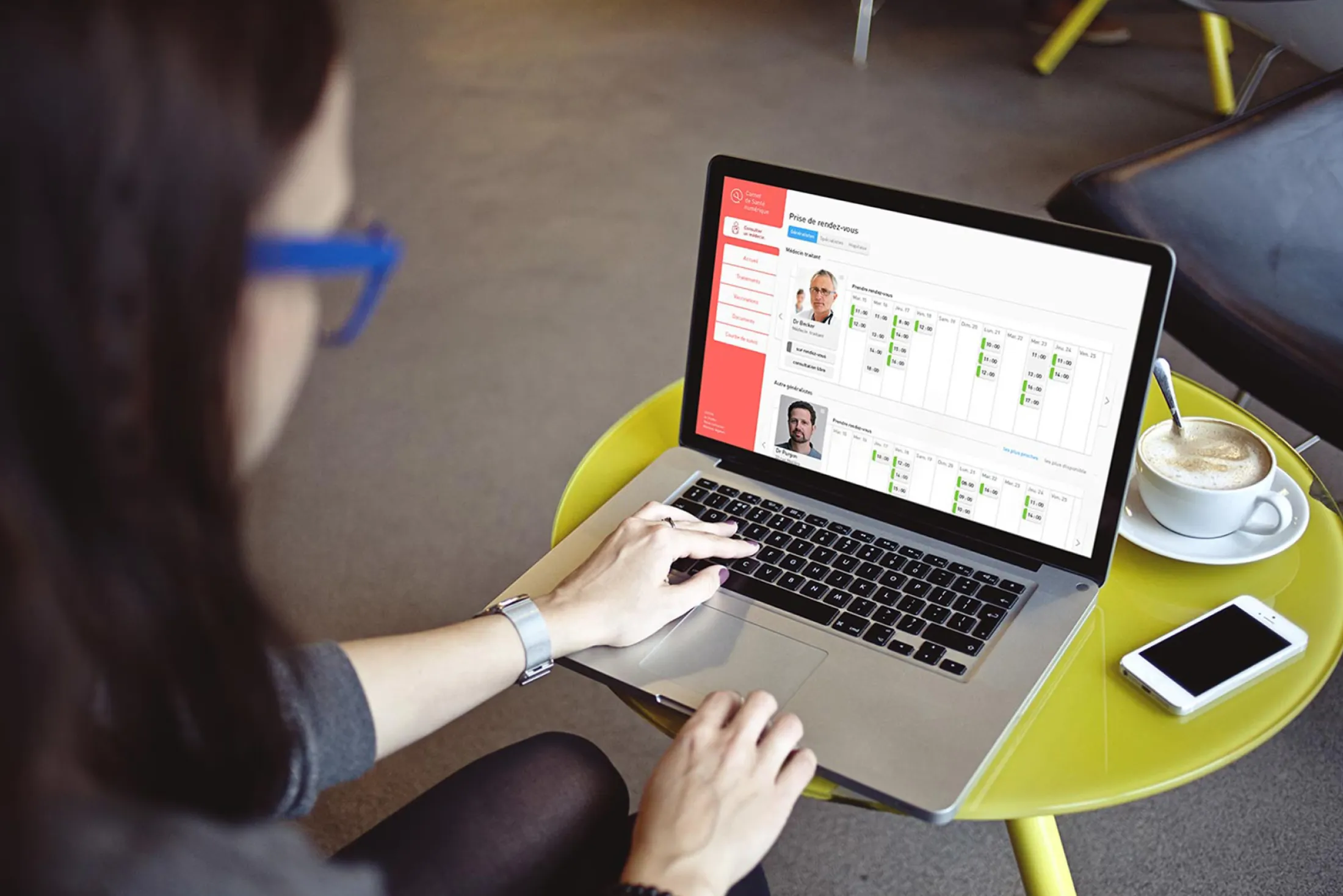
The web application was mocked up across a series of screens covering the service's core functions: medical record centralisation, connected data collection, secure sharing with healthcare stakeholders and overall health status visualisation. The journey was designed to be accessible to a wide range of profiles, including people with limited digital confidence, by prioritising simple navigation and a clear information hierarchy. Every feature was conceived to reduce the number of intermediaries between the user and their data.
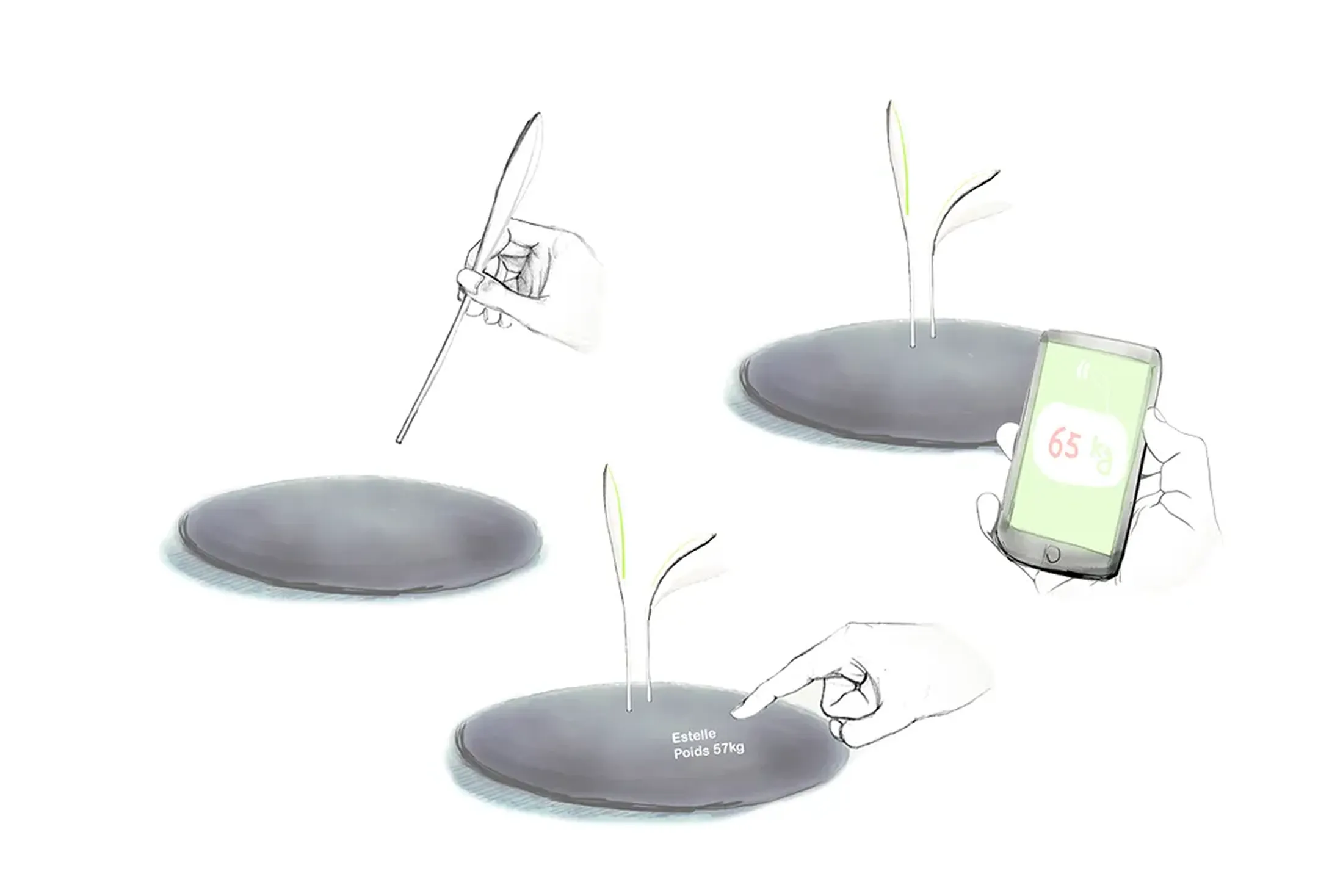
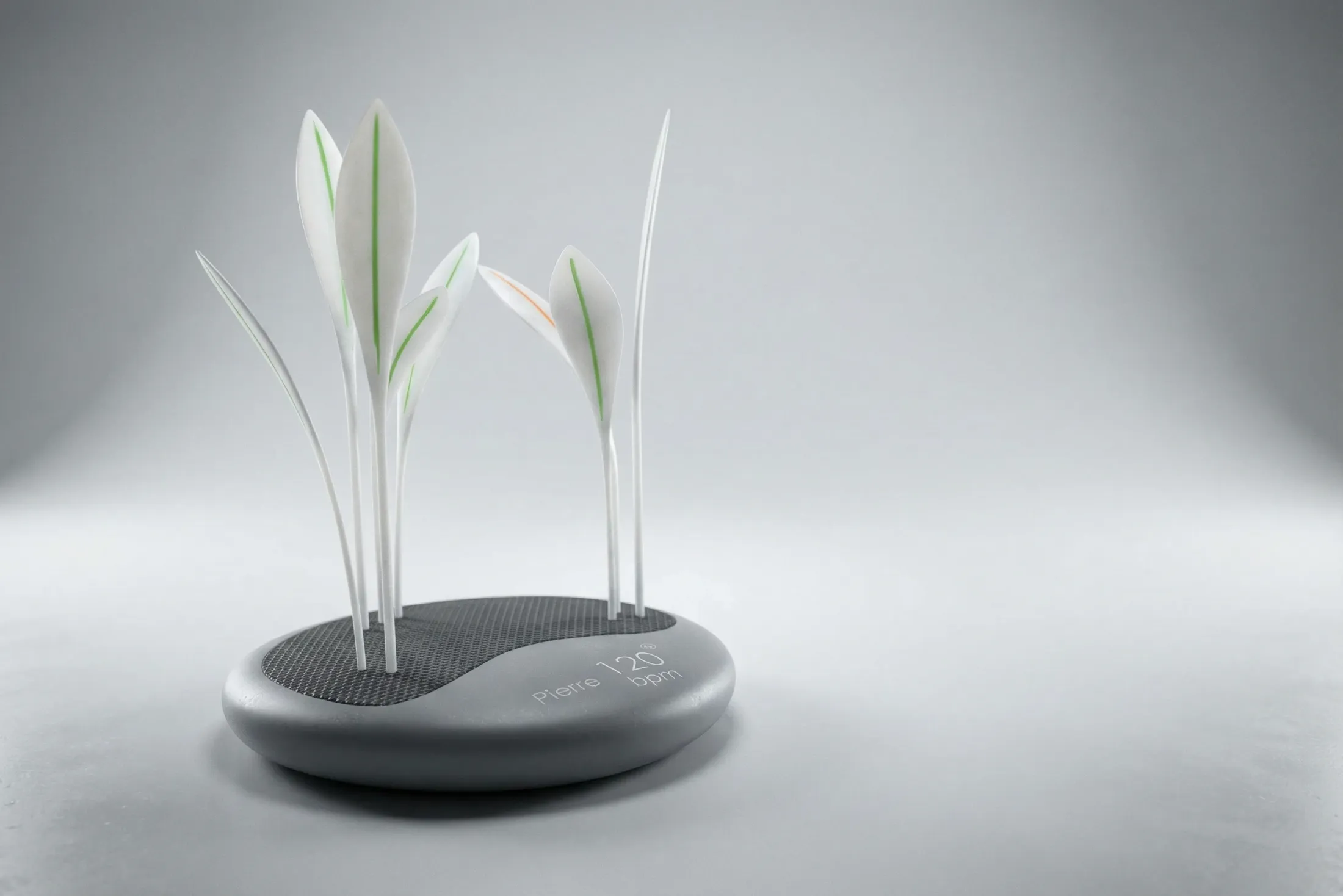
The Rozo connected object is the heart of the project's sensory proposition. Inspired by the form of reeds, it responds dynamically to changes in the health data of the user or members of their household. Its physical elements shift to reflect real-time health status, alert when something requires attention and allow an intuitive reading of the data without any digital interaction. Zifan Wang, whose industrial design training and different cultural background significantly enriched the process, brought a sensitivity to materials and form that I would not have reached on my own. We produced a series of exploratory sketches, then a full 3D model of the object to make the concept credible and presentable.
This project remained at concept stage. It was presented to the IT department of Groupe La Poste as the deliverable of an exploration phase, without moving into development. The goal was never to ship a finished product, but to demonstrate the credibility and desirability of a direction. The combination of web application and connected object made that case in a concrete, tangible way.
Results & learnings
Rozo was presented to the IT department of Groupe La Poste and met its mission objective: to propose a credible, coherent and distinctive concept in the digital health space. The project demonstrated that it is possible to design a health experience that is both functionally comprehensive and genuinely human, by pairing a digital interface with an evolving physical object.
This project confirmed that the strength of a team is not measured by its size, but by the diversity of perspectives it brings together. Working with Zifan, whose culture and industrial design training were radically different from mine, produced directions I would never have explored alone. His sensitivity to materials, form and physical objects was the exact counterweight to my more interface and user journey-oriented approach. That creative tension is what gave rise to the project's most distinctive proposition: making health data sensory, perceptible, alive.
This project also taught me something about the role of the sensory in design thinking. In a field as emotionally charged as healthcare, designing purely for functional efficiency is not enough. What reassures, what creates a sense of connection between an object and its user, those are the dimensions that make the difference between a tool and an experience.