

We worked with Lonestone on a UX engagement over three months. They understood our needs very quickly and proposed concrete solutions that we were able to put in place immediately within our team and our organization. The support was exemplary, with numerous recommendations aligned with web standards.
Introduction
Long story short
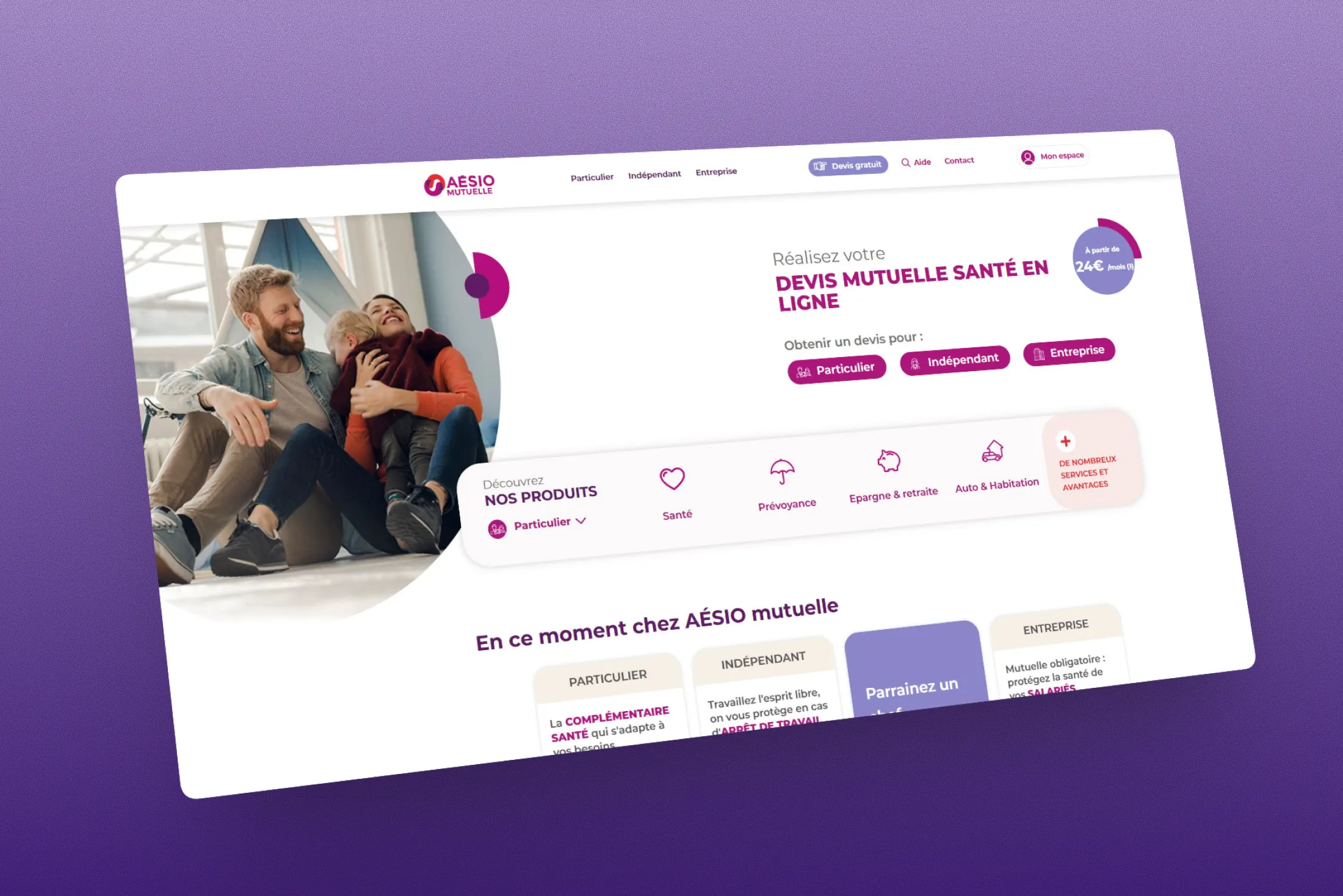
Aésio is a mutual insurance group serving more than 2.7 million members across a range of digital products targeting very different audiences: individual members, businesses, partners, internal advisors, and domain experts. In early 2024, Lonestone brought me in to support Aésio's teams in building their design system, a three-month engagement carried out independently with weekly check-ins alongside internal stakeholders. The goal was not to rebuild everything from scratch, but to capitalize on what already existed, correct the gaps, and establish a simple, solid, and extensible framework that Aésio's teams could own and evolve long after my involvement ended.
Objective
How might we design and document a design system tailored to Aésio's digital constraints, in order to bring consistency across all products and equip internal teams to maintain and grow it independently?
Roles
01 UX & UI AUDIT
Analysis of 200+ screens across 7 Aésio products
02 DESIGN SYSTEM
Foundation definition, component design, documentation writing
03 CONSULTING & TRAINING
Training sessions with the lead designer and internal teams
Problem Definition
Market research
The mutual insurance and social protection sector faces growing expectations around digital accessibility and experience consistency, in a context where members benchmark their experience against the most advanced players in financial services. For a group of Aésio's scale, a shared design reference across teams is a prerequisite for maintaining coherence as the digital product portfolio continues to expand.
User research
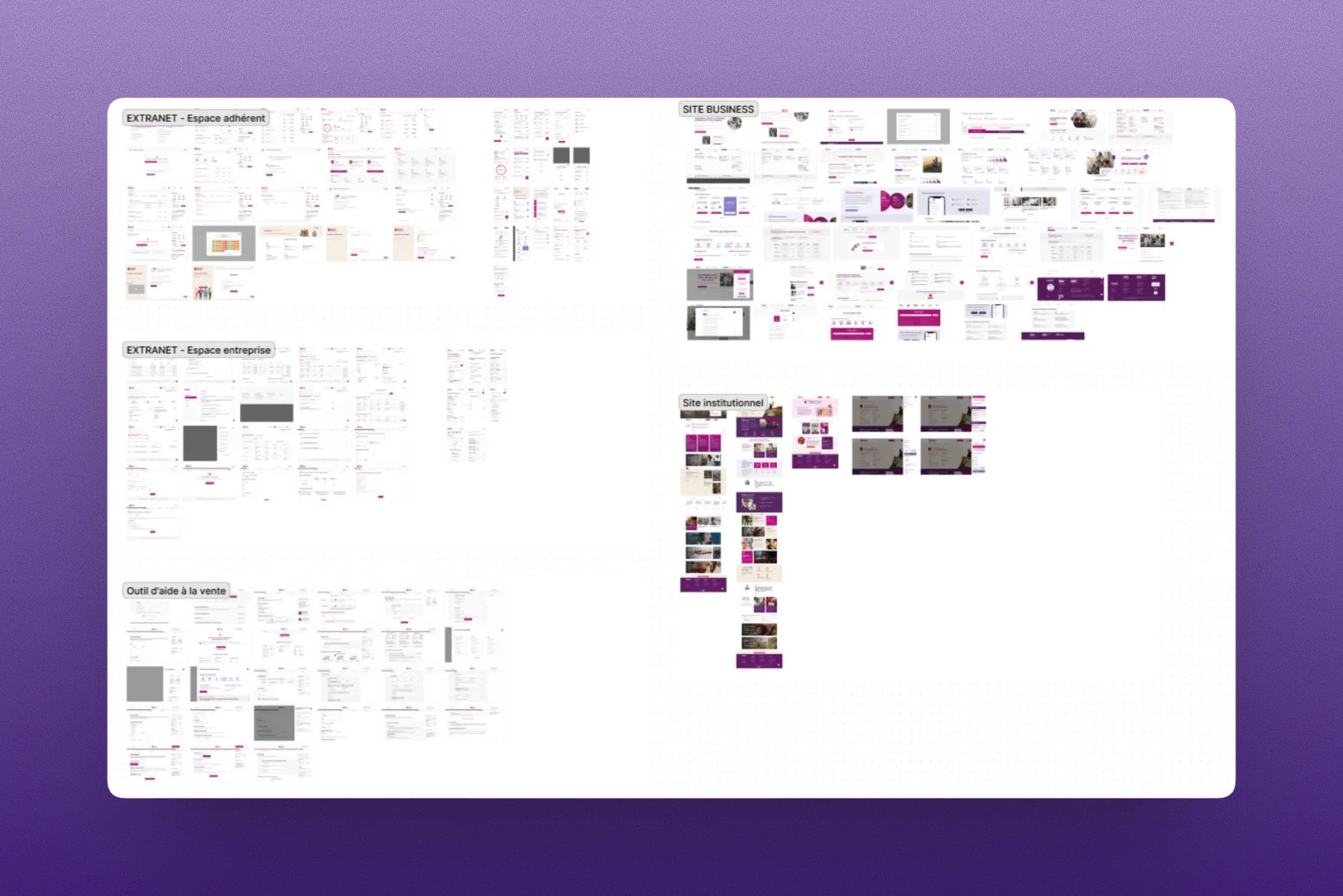
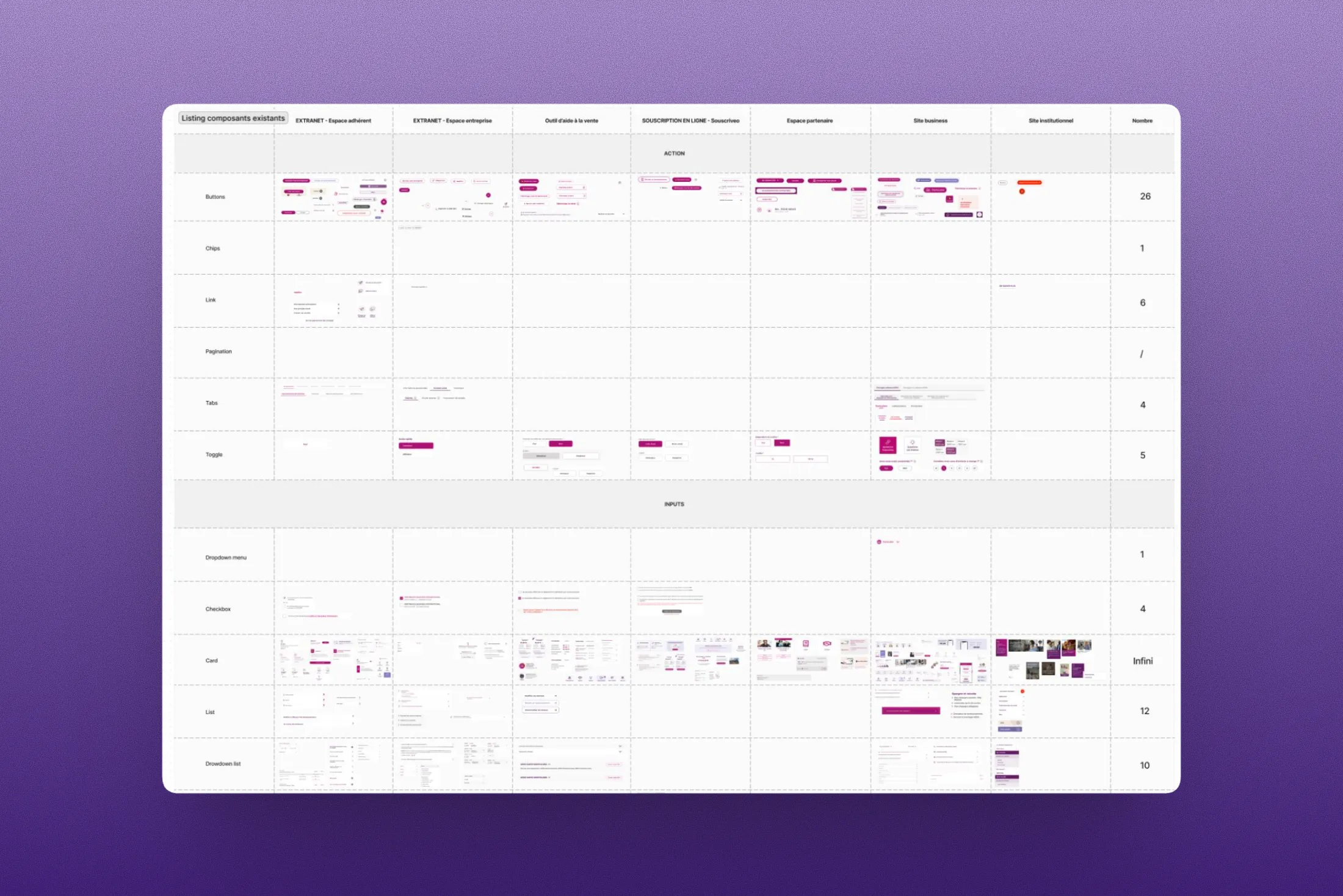
The audit phase served as the initial research layer. I reviewed 7 tools, analyzed 233 screens, and catalogued 161 distinct components across their variants, covering everything from internal tools used by advisors and domain experts to customer-facing interfaces and the institutional website. This inventory allowed me to assess the UX maturity of the existing landscape, identify strengths and weaknesses, and anticipate the volume of work ahead. The overall picture was encouraging: the gaps in terms of user experience were not severe, but the heterogeneity of components and the absence of a shared reference were making every new development more costly than it needed to be.
Opportunities
01
Adapt the print brand to digital constraints without disruption
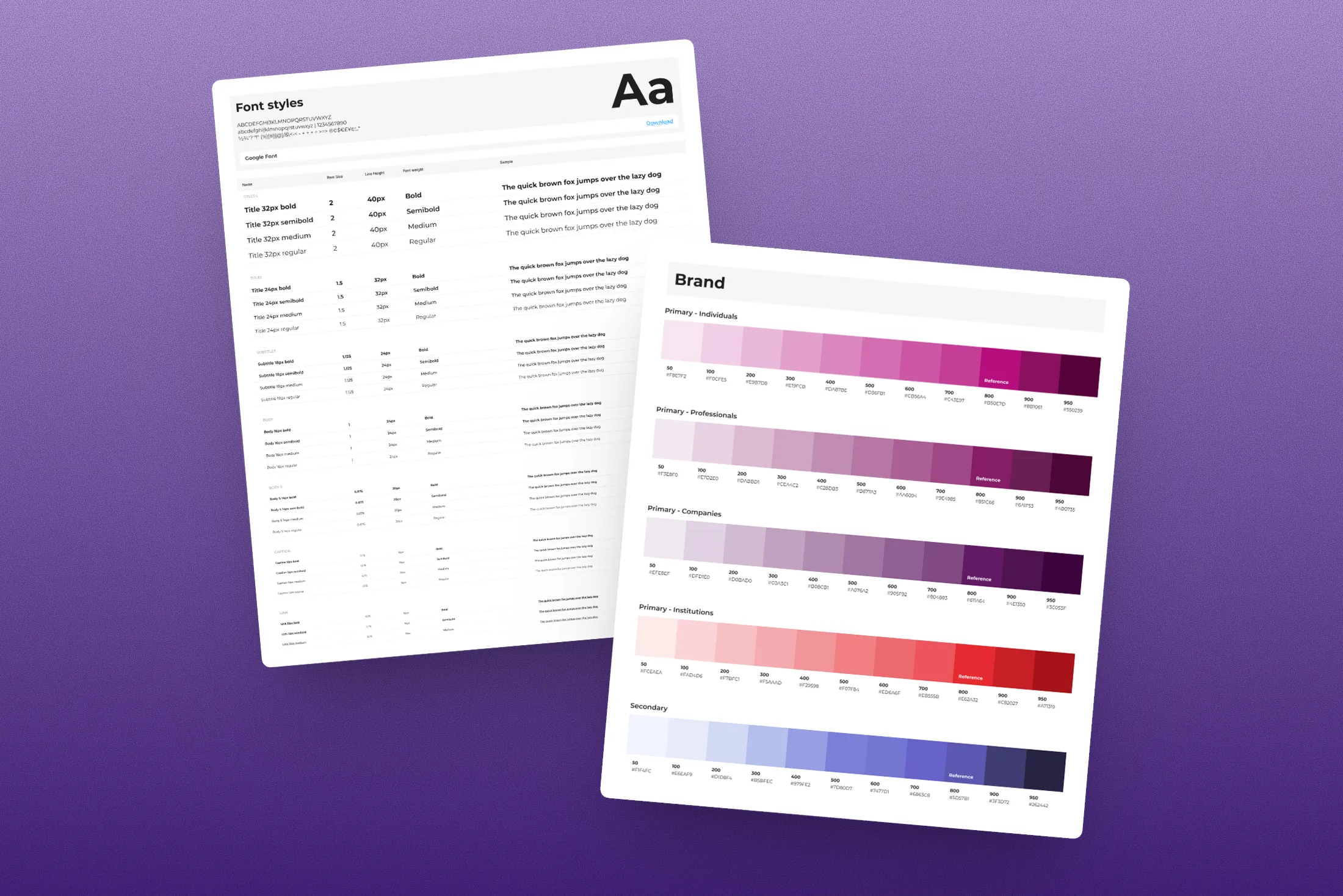
Aésio already had an existing print-oriented brand guidelines with an established color distinction by audience segment. Rather than starting from scratch, I used this as the foundation for the design system, adapting colors and typography to the requirements of digital interfaces, particularly around contrast and information hierarchy.
02
Create a shared reference for teams working in silos
With designers working on different products, lacking common foundations created visual inconsistency and slowed delivery. A well documented design system was the lever to align teams without centralizing everything.
03
Bring the lead designer on board from day one to ensure longevity
A design system delivered without knowledge transfer is a design system destined to decay. From the very start of the engagement, a core objective was to train the internal designer responsible for the subject so they could take ownership, evolve it, and advocate for its place within the organization.
Solution Design
Scope & prioritisation
The audit identified five priority areas: improving color usage, clarifying the scope of pictograms and illustrations, strengthening consistency in editorial content, building a homogeneous and accessible component library, and bringing greater rigor to execution, both in interface design and in development. The production scope covered approximately one hundred components, from atomic elements through to page templates, organized across two distinct Figma files: a Foundations file and a Components file.
UX — Flows, wireframes
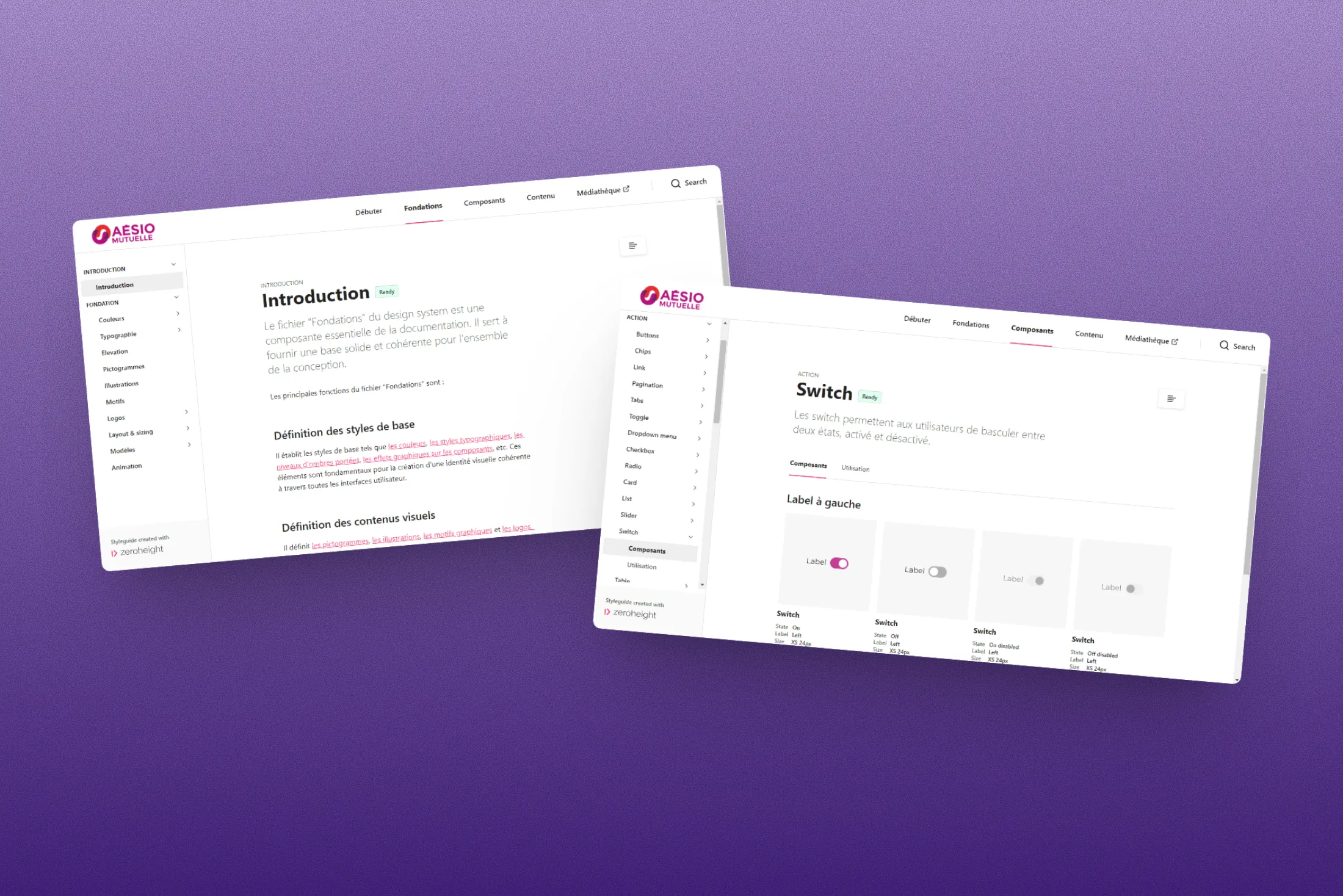
In the Foundations file, I adapted the print brand's color palette to digital use while preserving the existing audience segmentation, and created the full range of text styles needed to improve information hierarchy on screen. In the Components file, I ensured that every input field was systematically associated with a label, and that all components followed a consistent color logic across states, disabled, inactive, active, and focused. The design system was then stress-tested against existing screens and complex business cases, including data-heavy tables, to validate its robustness before handoff.
Visual Design & UI
I worked with Figma variables to implement design tokens, which accelerated production and created a direct bridge with the development team responsible for implementation. Bringing a technical lead into the process from the outset, to define the precise scope and validate the feasibility of each design decision, was a structuring choice that prevented a significant number of back-and-forth exchanges during the implementation phase.
Implementation, QA & handoff
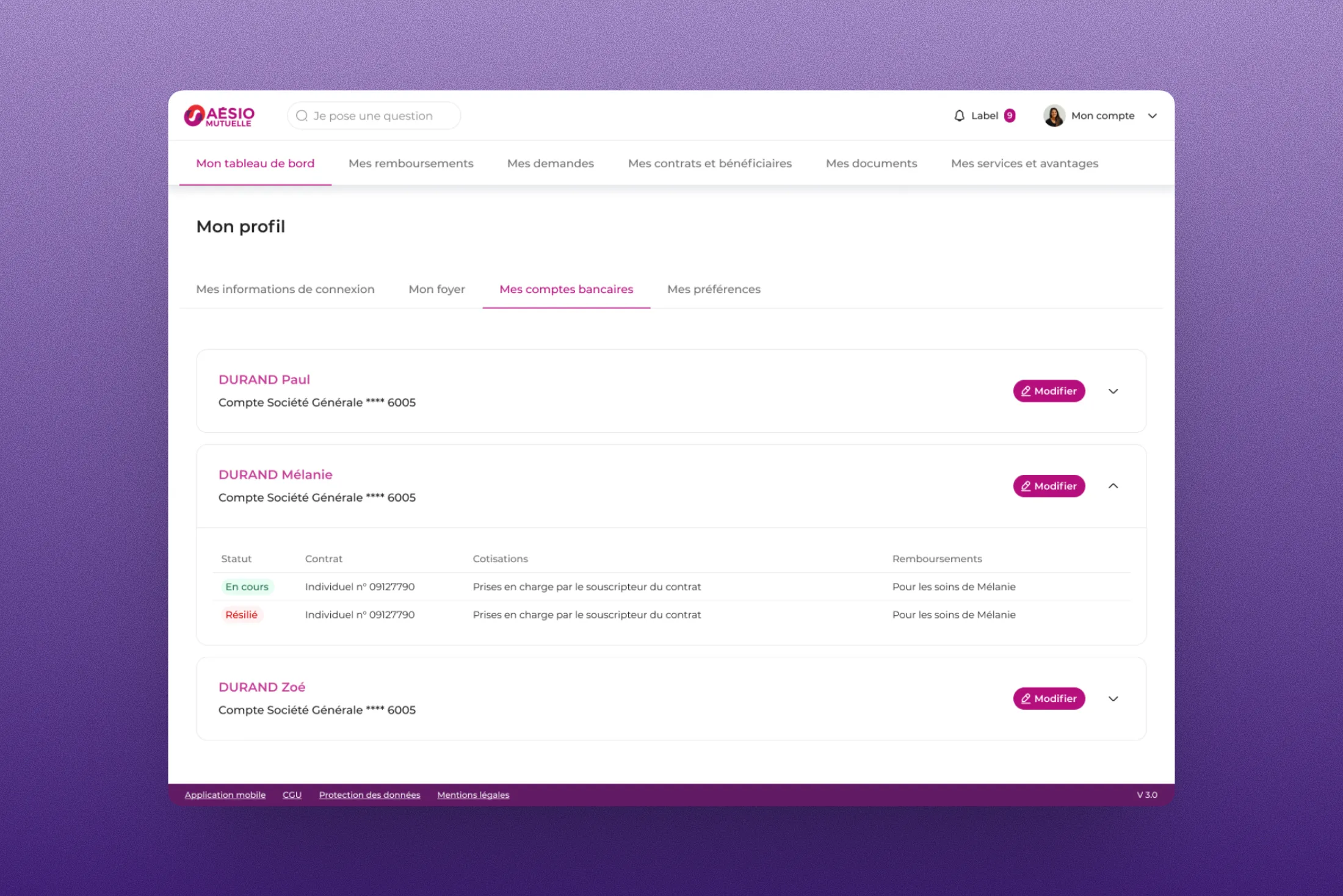
Documentation was written in parallel with the design work on Zeroheight, with an introductory chapter aimed at non-initiated team members, covering questions such as "what is a design system," "who is it for," and "how do you contribute to it." The V1 delivery was followed by an implementation phase by Aésio's teams, then by regular check-ins to adjust elements at the margins. The design system has since been applied to the client portal, and has contributed to shifting the perception of design internally within the organization.
Results & Learnings
Results
The design system was delivered at the end of the three-month engagement and adopted by Aésio's teams, who applied it first to the client portal. It enabled multiple designers to work across different products while maintaining a consistent approach, reduced visual inconsistencies, and streamlined production. Beyond the delivery itself, the mission had a longer lifespan than originally scoped: I continued to support the lead designer for an additional year through regular check-ins, during which they progressively built their skills, gained maturity on the subject, and strengthened the position of design within Aésio's teams.
Learnings
What I valued most about this engagement was its breadth: consulting, production, training, simplification, and presenting to stakeholders with real internal political stakes. A design system is not just a Figma deliverable, it is an organizational project as much as a technical one, and bringing a team along on that journey requires as much pedagogy as it does rigor in execution.
Accompanying a more junior designer over the long term, watching them grow in confidence and legitimacy within their organization, was one of the most tangible satisfactions of this mission. What would I do differently? I would have gone further on governance from the outset, formalizing clear contribution and evolution rules earlier in the process, so that the team would be even better equipped to keep the design system alive independently after my involvement ended.
Client feedback
