
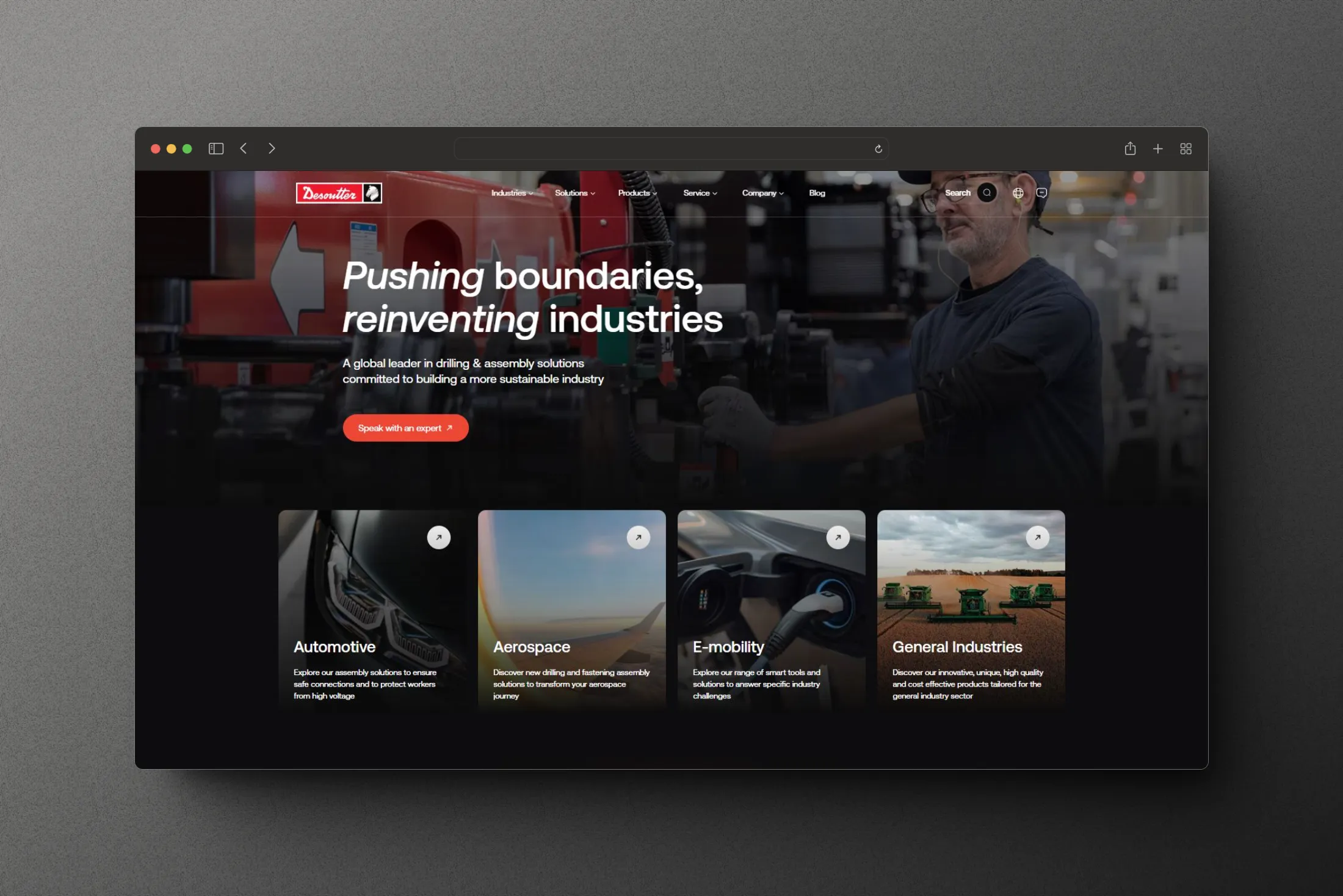

I'd like to warmly thank the team that successfully delivered V2 of the Desoutter website. The V1 project had already been very well managed, with very positive user feedback. Thomas and Vincent (Product Manager) were able to translate field feedback and our new needs into a V2 that lets us take another big step forward. Thanks also to the entire dev team that contributed to this V2.
1. Introduction
Long story short
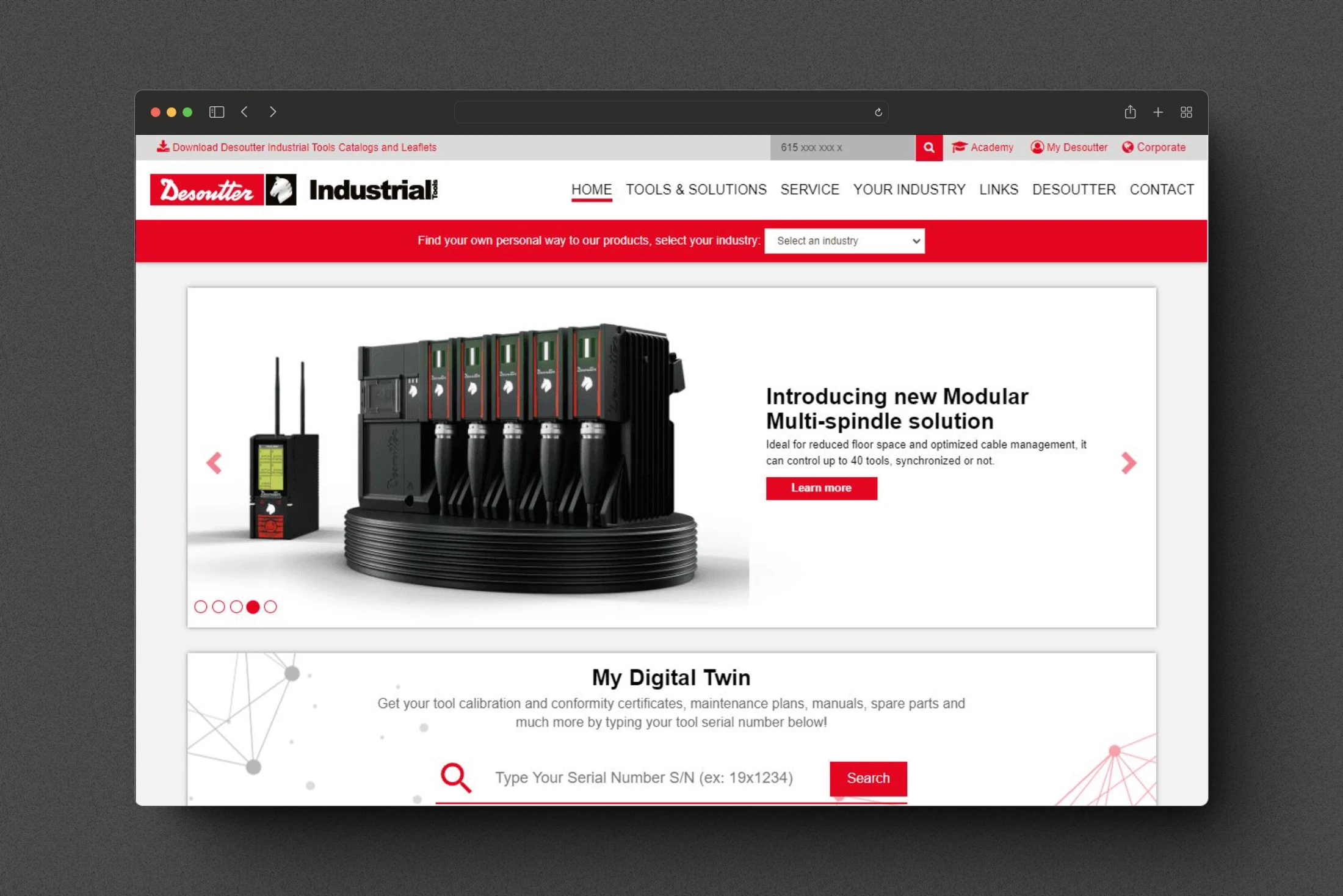
Desoutter, a global leader in high-performance industrial tools, had a website nearly 10 years old, disconnected from user expectations and current web standards. Brought in by Lonestone, I led the entire user research phase and co-designed the new website over 6 months, from defining the strategic pillars to final acceptance testing.
Objective
How might we help Desoutter's prospects and customers find the right tools, services and expertise, wherever they are in the world?
Role
01 USER RESEARCH
I independently led the entire user research phase (focus groups, multi-country survey, interviews) and translated the findings into 8 design pillars that guided every design and technical decision throughout the project.
02 DESIGN
I co-design 50+ blocks and variants that enabled us to produce a large volume of mockups within tight deadlines, while maintaining system-wide consistency.
03 DELIVERY
I was actively involved in development oversight and UX/UI acceptance testing, ensuring the initial vision was faithfully carried through to the on-time launch of v1.
2. Problem Definition
Market research
Desoutter Tools is an industrial manufacturer of pneumatic and electric assembly tools, founded in 1914, with 20 subsidiaries and a presence in 170 countries. The professional tools market is undergoing rapid transformation: industry 4.0, predictive maintenance, traceability, data valorization and an expanding range of services are pushing customer expectations well beyond a simple product catalogue. In this increasingly competitive landscape, digital presence has become a key commercial differentiator.
User research
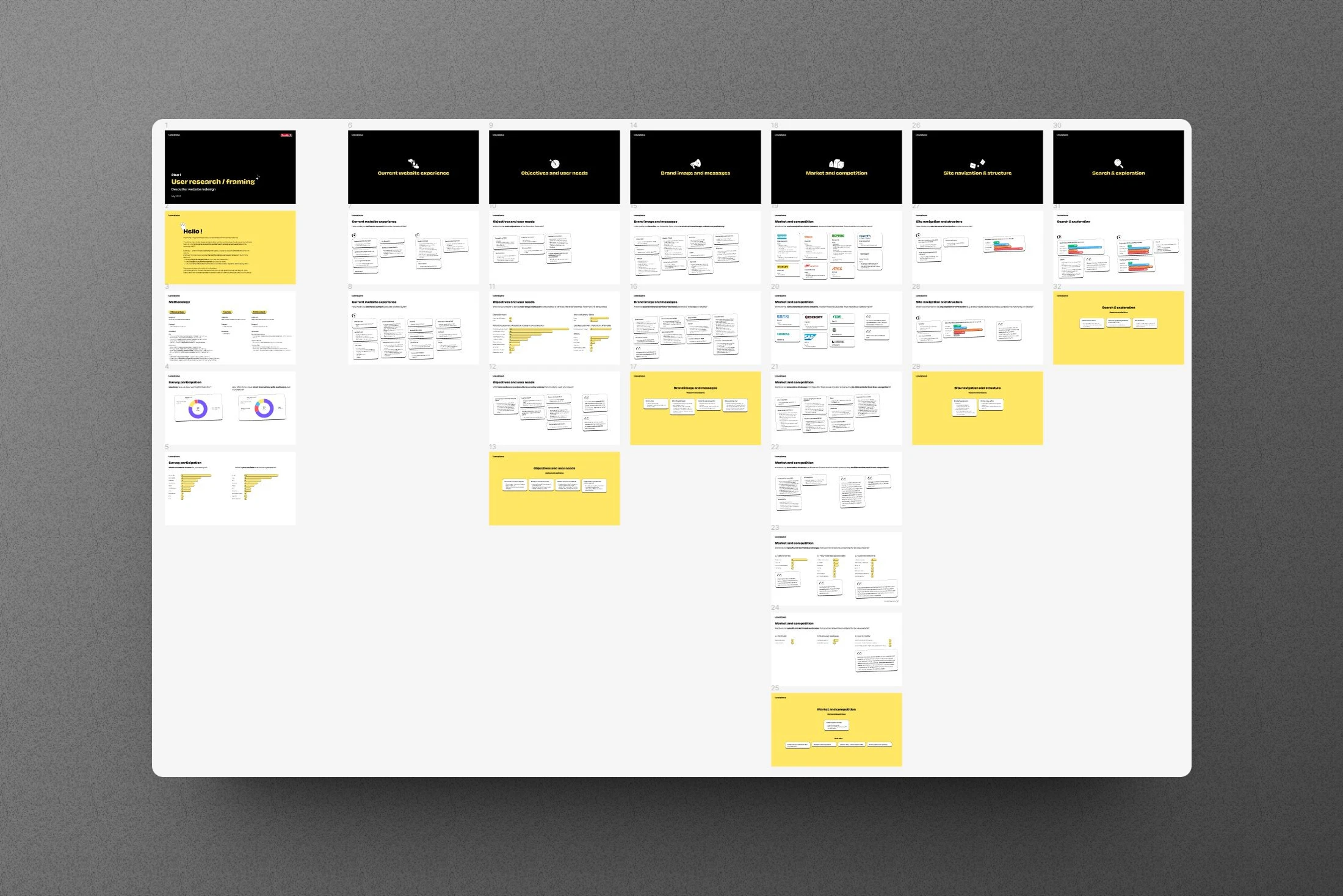
I independently led the research phase, combining three complementary methods.
Three focus groups were conducted: one with the team responsible for digital experience, a second with technician and engineer profiles focused on tools and services, and a third with sales and marketing profiles to capture business priorities.
A survey was then sent to the various international Customer Centers (North America, Eastern and Central Europe, United Kingdom, China, India…) to gather the needs and trends specific to each local market.
Finally, 5 individual or paired interviews allowed us to go deeper on the most significant topics that emerged from the earlier sessions.
Opportunities
01
Empowering users with self-service
An excessive volume of inbound contacts to sales and support teams for requests that could have been resolved independently — a sign of insufficient access to information.
02
Improving the sales funnel
Poor performance on key pages such as the product catalogue, which sits at the heart of the purchasing journey.
03
Balancing brand consistency with local relevance
A rigid content management approach, ill-suited to the diversity of local markets and their localization needs.
Synthesis
As a synthesis, I defined 8 design pillars to guide design and technical decisions: simplification, improved access to products and solutions, greater emphasis on the human dimension, better accessibility of documentation, and more autonomy for prospects and customers.
3. Solution Design
Scope & prioritization
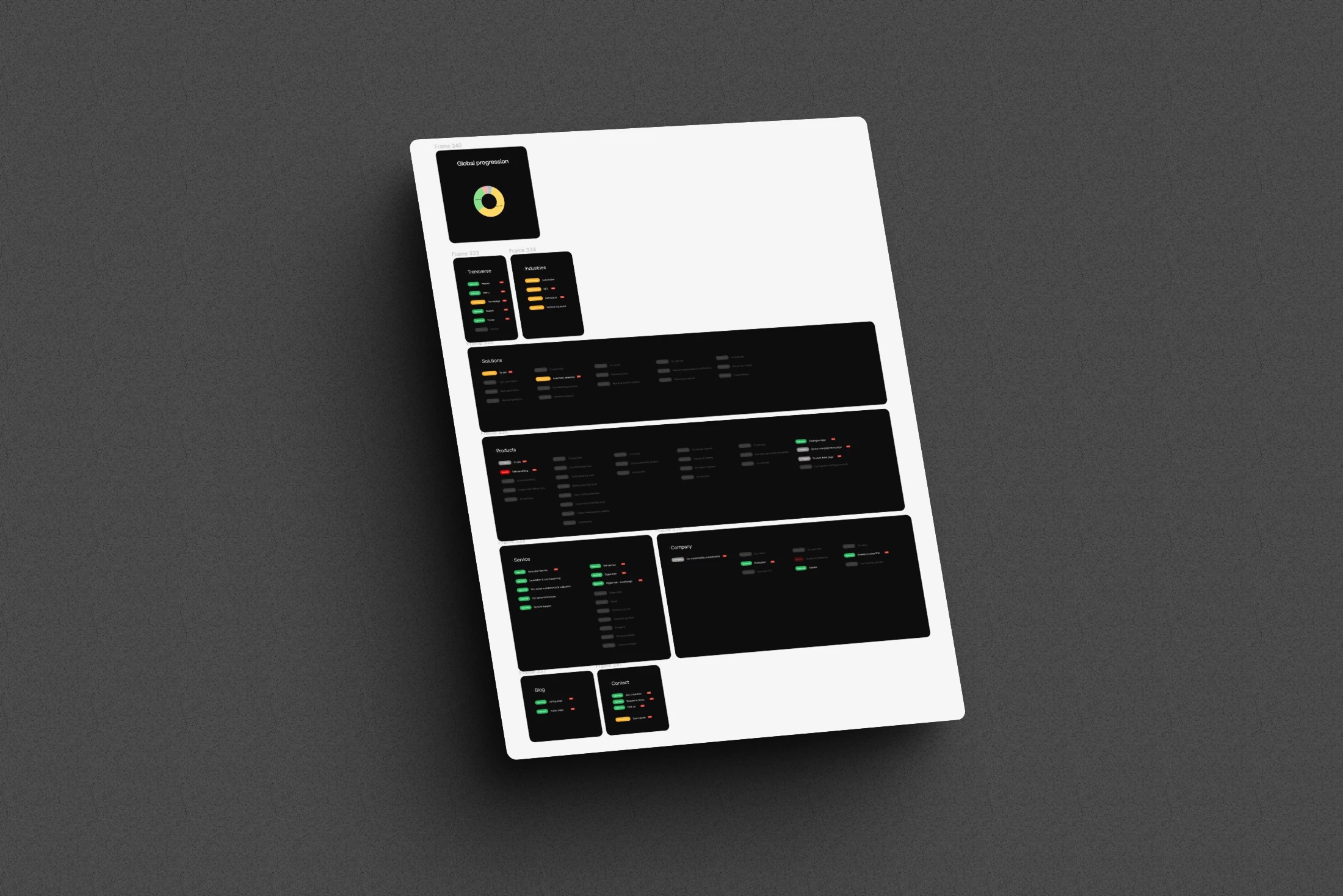
Given the breadth of the existing site, we recommended an iterative approach to Desoutter: defining a solid MVP scope rather than rebuilding everything at once. We listed all screens to be designed, identified those prioritized for v1, then set up a shared tracking dashboard with all stakeholders, continuously updated by Florent and me.
Block system and variants
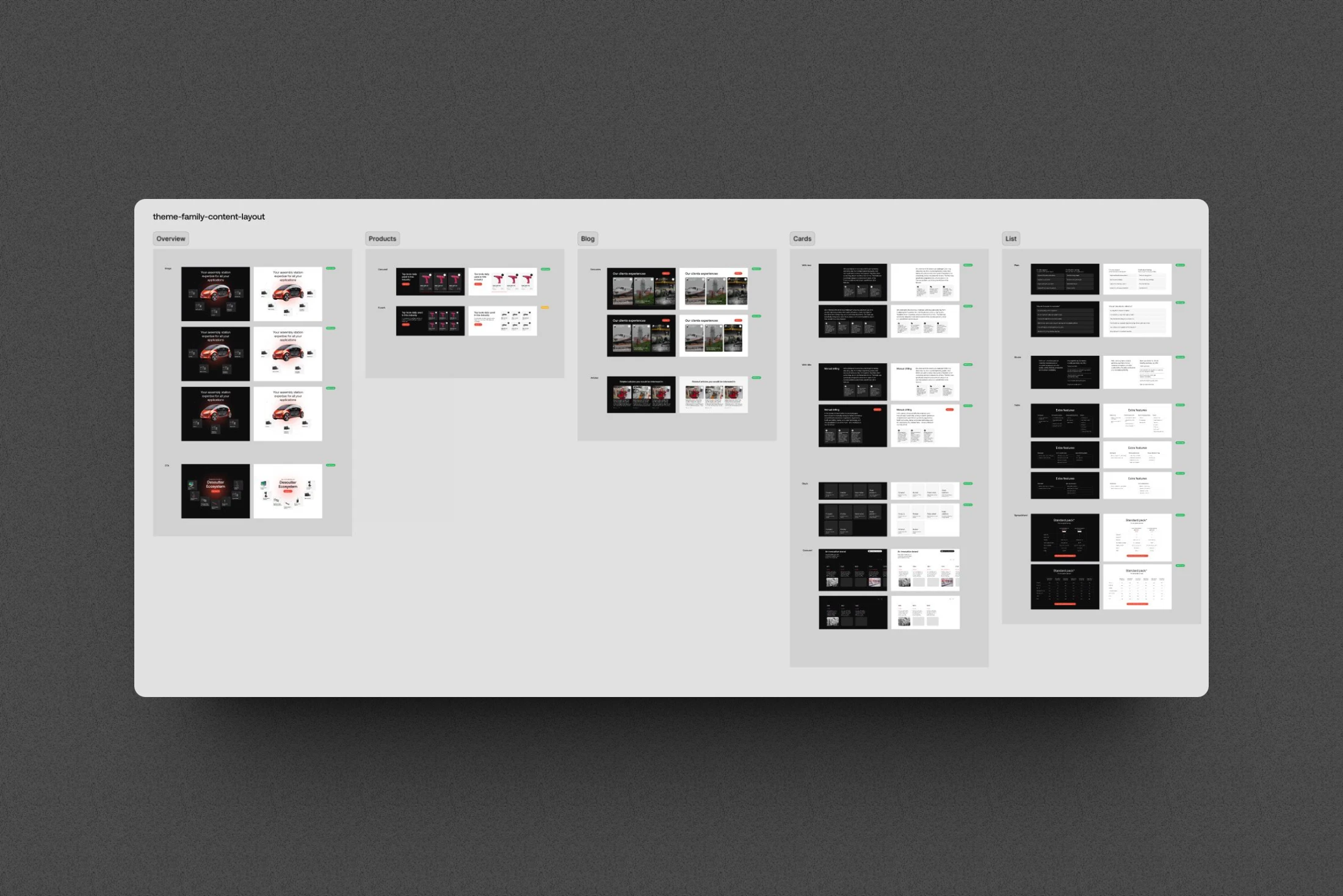
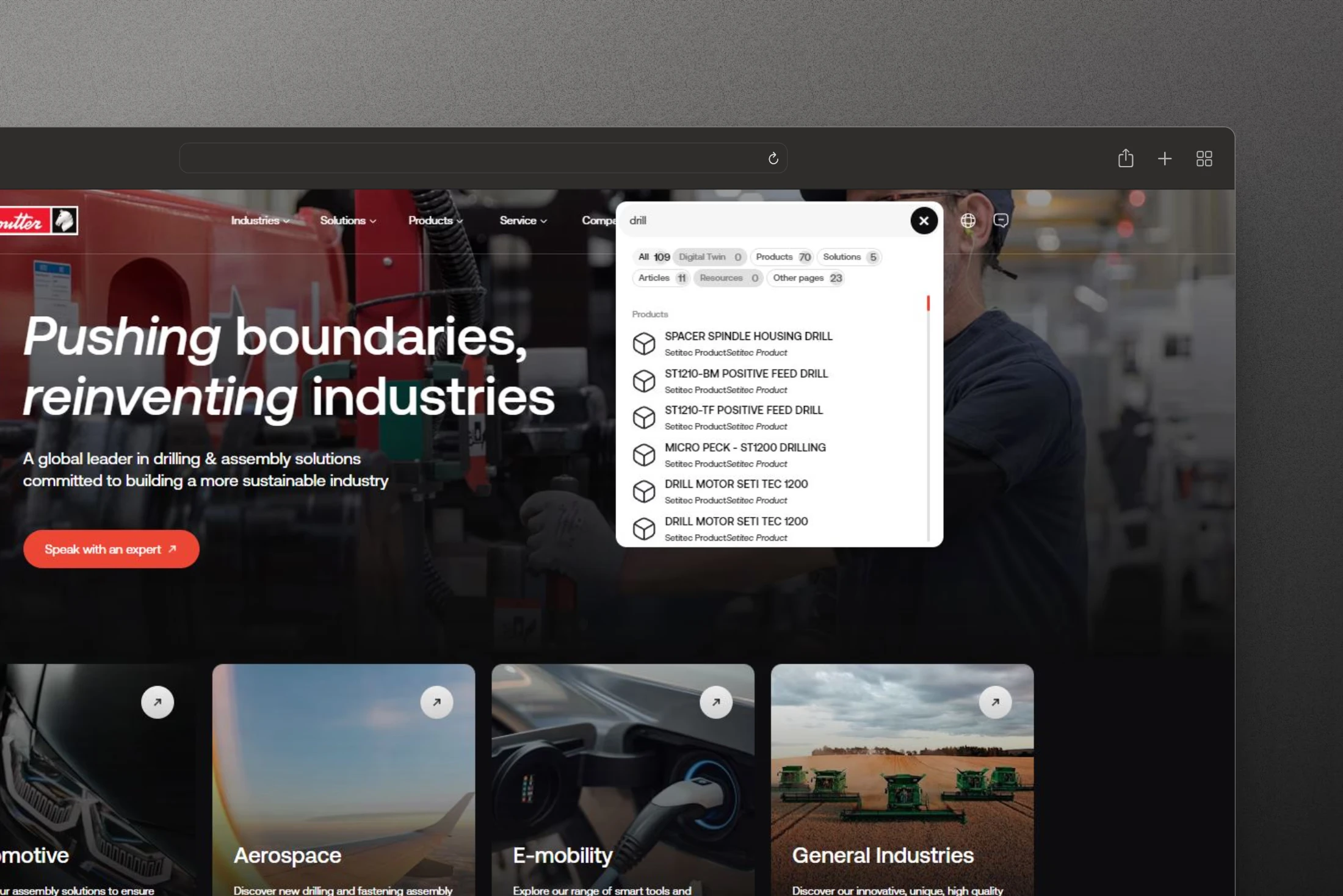
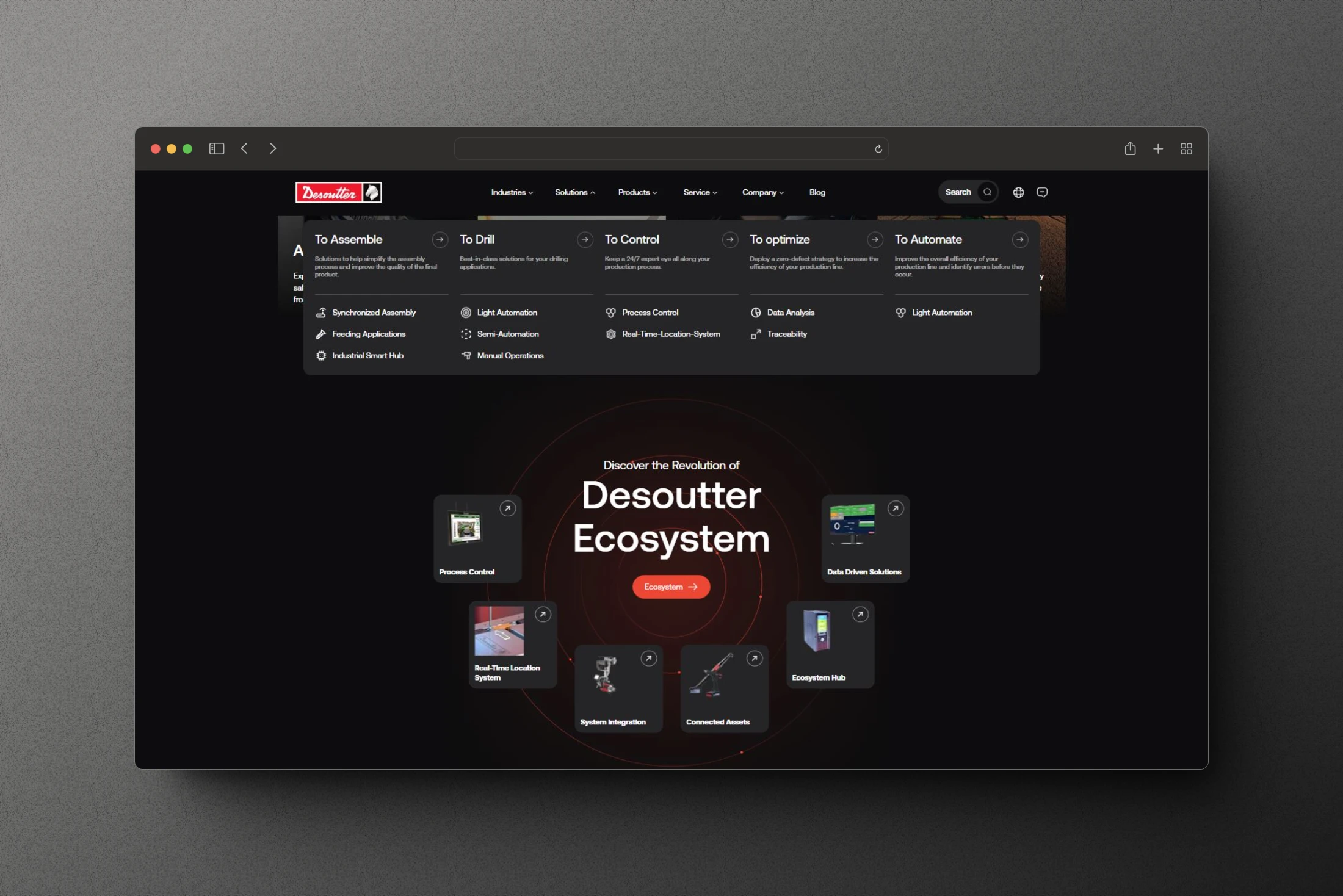
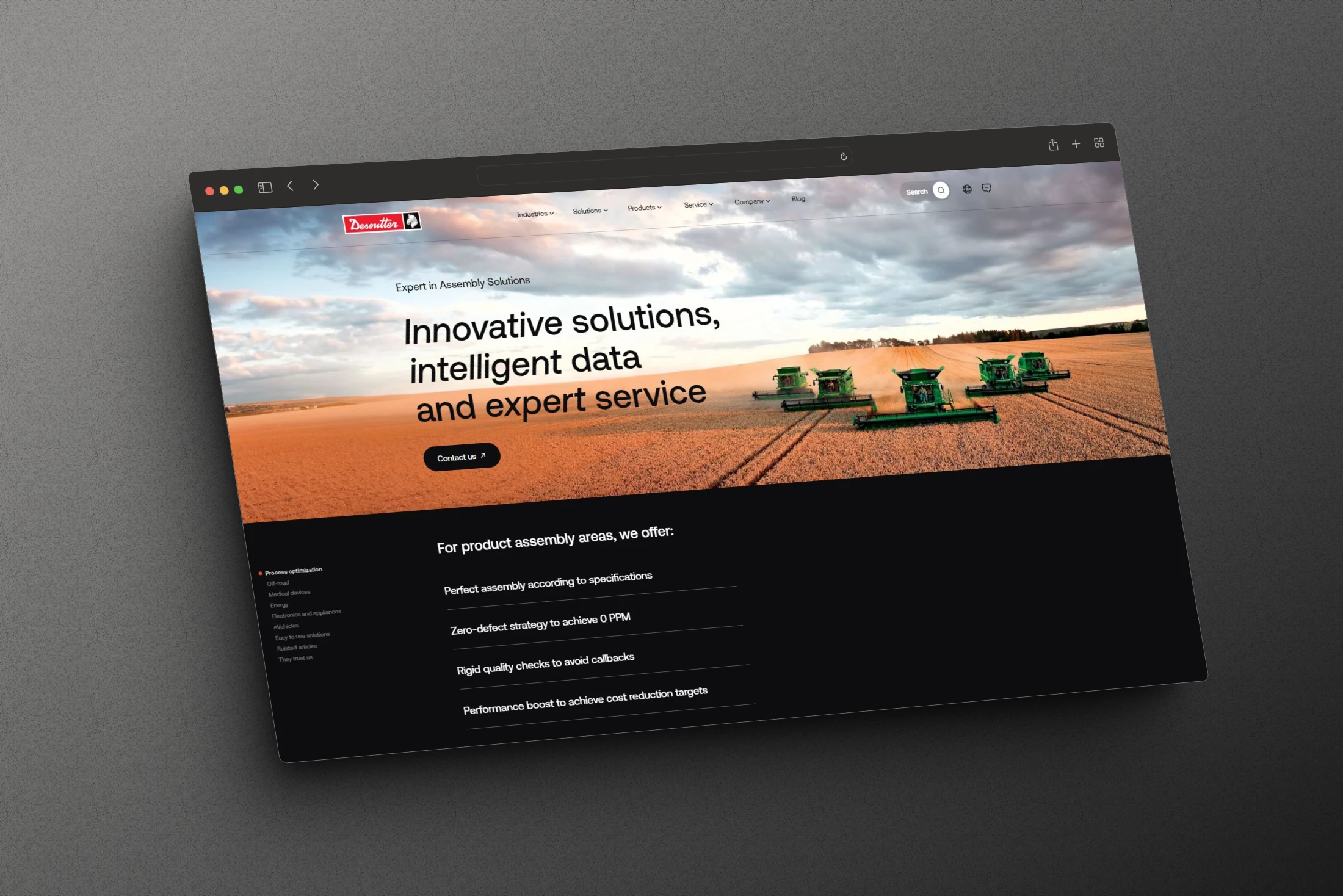
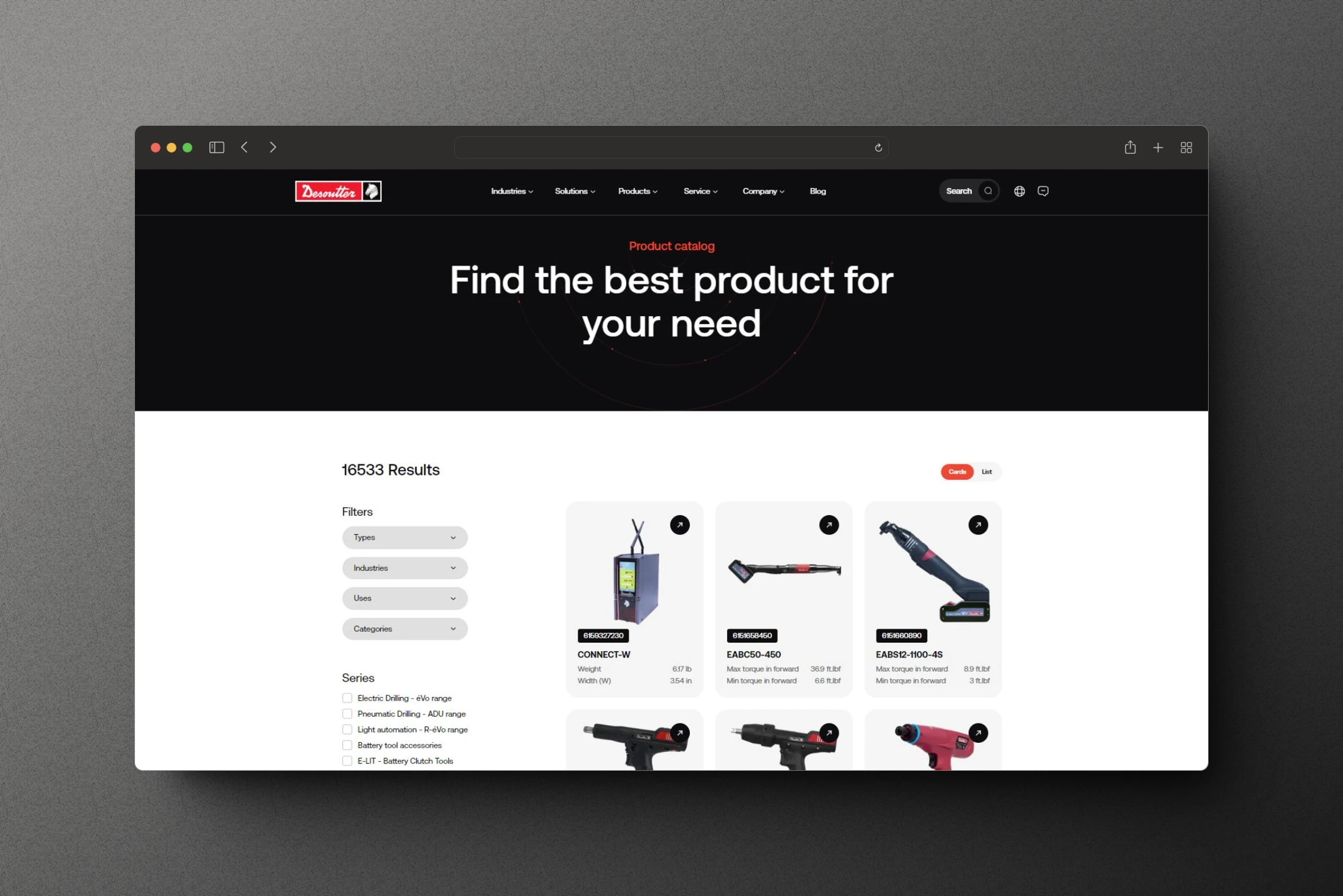
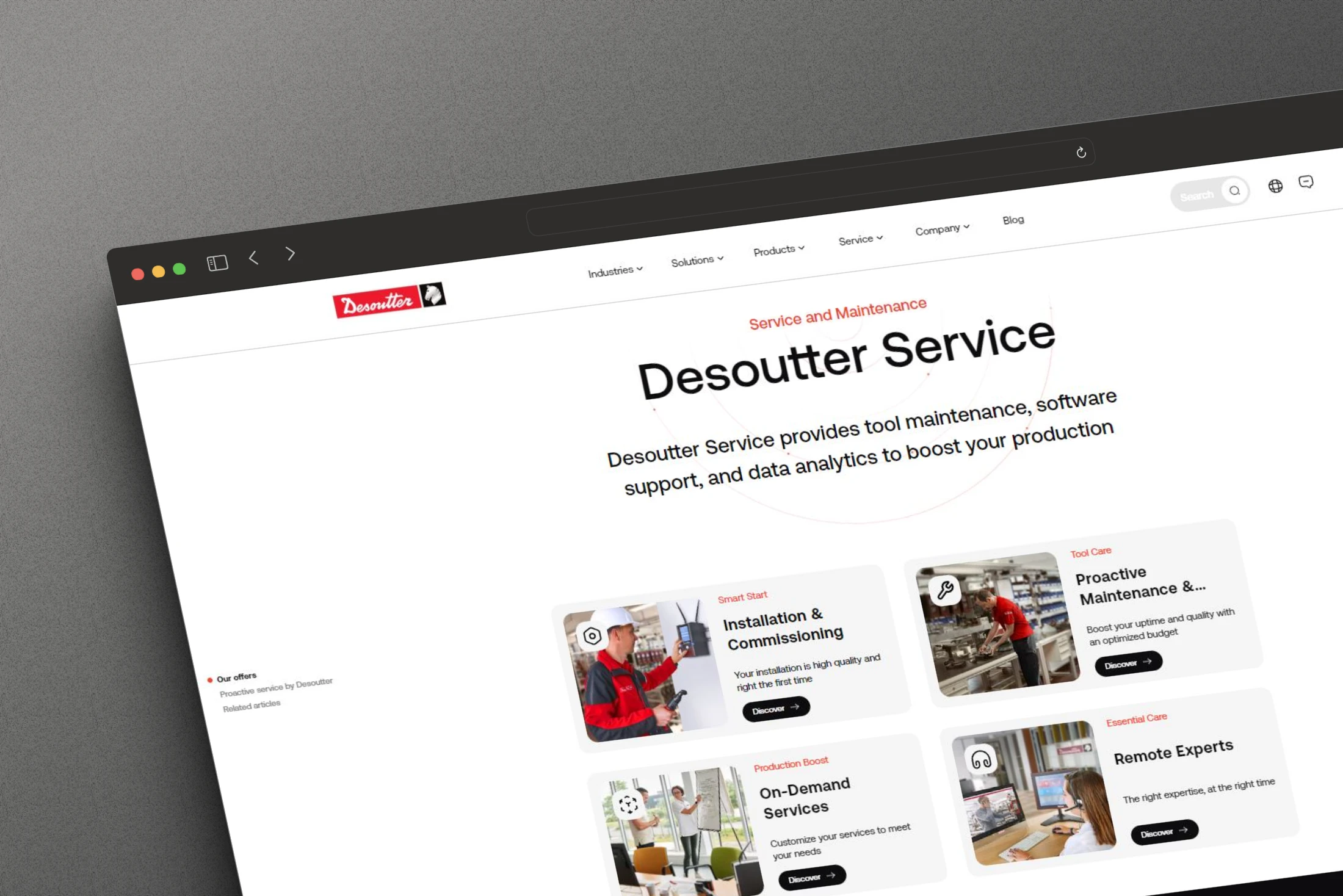
Rather than designing screen by screen, we opted for a modular approach: first building independent blocks and their variants, then assembling pages from them. This decision had three direct effects: it allowed us to work in parallel with distinct scopes, produce a large volume of work within tight constraints, and significantly ease the developers' work for content administration on the client side via Dato CMS.
Visual direction & UI
The visual challenge of this project was particularly delicate: modernizing the brand image without touching the existing colors or logo. We invested significant time in typographic research to identify a variable font capable of bringing rhythm and breathing room to each page, where the previous site sorely lacked visual hierarchy.
A significant part of the work involved defending our design choices with the client. Engineers by training, Desoutter's stakeholders had a natural tendency to want to fill every available space, much like an exhaustive technical datasheet. Convincing them that empty space is a deliberate design choice in its own right — and not a gap — was one of the recurring threads of the collaboration throughout the project.
Integration
The design work didn't stop at the developer handoff. For several weeks, Florent and I continued to adjust certain mockups as integration progressed, based on technical constraints identified along the way. This phase taught us how to preserve the original vision while staying pragmatic, distinguishing what was negotiable from what wasn't.
4. Results & Learnings
Result
The v1 was delivered on time and warmly received internally. Beyond the metrics, the project achieved a less visible but equally structural goal: aligning internal teams and international subsidiaries around a website that finally represents the company at the level of its global leader positioning.
Impact
Human
For the first time, sales reps, marketing teams and local subsidiaries recognize themselves in a tool that reflects their level of standards.
Operational
Thanks to the block and variant system paired with Dato CMS, teams save considerable time on every page creation, with multilingual constraints built into the design from the start rather than bolted on at the end.
Commercial
Improved sales journeys — particularly the introduction of selectors — have made commercial work easier.
Learnings
On this project, I sharpened a skill I wouldn't have spontaneously associated with a B2B industrial website: storytelling. Desoutter sells precision tools, but behind every tool there are engineers, assembly lines, and real-world performance stakes. Learning to tell those human stories rather than coldly displaying technical datasheets was one of the most lasting takeaways I carry from this project.
Client feedback
